- Home
- Best quality dog food
Best Quality Dog Food To Keep Your Cocker Spaniel Happy and Active!
Feed your Cocker the best quality dog food you can afford, and you will see the results: a shining coat, sparkling eyes and a cold, wet nose!
Learn how healthy dog food can improve your Cocker Spaniel's health and well-being and put a zing back into his step!
Why Should I Feed The Best Quality Dog Food To My Pet?
I'm often asked, 'Why should I bother feeding my dog expensive food when he'll eat anything I put in front of him?'
It's not that they don't love their pet; they certainly do; they're simply trying to save money and hang onto their hard-earned cash.
If money is tight, feeding your dog on table scraps may be tempting if it means saving money; unfortunately, table scraps won't be nutritious enough for your Cocker Spaniel. Your Cocker Spaniel's diet is essential to his well-being, so feeding him the best makes sense!
 Nothing but lip-smacking best quality dog food for me!
Feed your Cocker quality human-grade dog food to give him all he needs to grow strong and healthy and help him develop to his full potential, both physically and mentally.
Yes, the best quality dog food may be more expensive than leftovers, but it's much more nutritious and will keep your dog healthier and more active.
And, as a bonus, you'll save money in the long run, particularly on vet bills, because a healthy Cocker won't need to see his vet so often.
The English Cocker Spaniel Diet and Behaviour
Feeding your Cocker Spaniel the best quality dog food that is well-balanced and nutrient-rich will ensure his diet meets all his growing needs.
It's the same with our children; we must feed them a balanced diet to ensure they grow strong and healthy.
A poor diet can often explain many behavioural problems. So, if your Cocker has behavioural issues, improving his diet will not only improve his health but may also improve his behaviour.
We all want a well-behaved Cocker Spaniel, so that's a win-win situation, don't you agree?
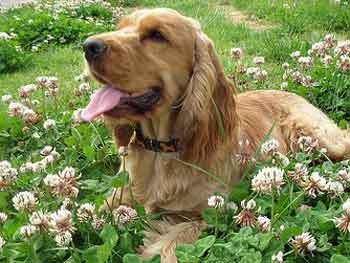
 Just look at how shiny this Cocker's coat is!
Quality Dog Food Can Help With Food Allergies
Occasionally, our pets may be allergic to certain foods.
If your Cocker has a food allergy, feeding him a healthy dog food diet may help prevent or eliminate the allergy - at the very least, it may help alleviate his allergy symptoms.
Before deciding on a particular brand of dog food, it's always best to check the manufacturer's ingredients label to understand precisely what goes into the food we give our pets.
Look for dog food that lists meat or protein as the main ingredient.
Avoid brands where the main ingredients are fillers, such as wheat or corn, as they're unlikely to contain enough quality nutrition for your Cocker Spaniel's diet.
The same applies to foods containing soy, gluten, added sugar or sweeteners, added salt, artificial colours, additives or by-products; leave them on the supermarket shelf!
Not only can fillers and additives be problematic for your Cocker Spaniel's digestion, but they're also often the cause of food allergies in our pets.
The good news is, if your dog is an allergy sufferer, you can now buy hypoallergenic dog foods in supermarkets and pet stores.
What Is The Best Diet for Cocker Spaniels?
Visitors often ask which dog food is best, and I don't have a specific answer because I believe it's entirely down to the owner and their pets.
Many diets will nourish your dog, giving him all he needs to grow healthy and strong.
What follows is an explanation of all the different diets available for your pet. I hope it helps you to choose yours.
Organic and Natural Dog Foods
The terms organic food and natural food are often misused interchangeably, but they are different.
Organic dog food is farmed responsibly and won't contain artificial chemicals or preservatives; it's an excellent example of how we can improve our Cocker Spaniel's diet.
Natural dog food isn't necessarily organic but is still the same high-quality, often human-grade food.
Raw Dog Food Diets
You could feed your Cocker Spaniel a diet of raw meats and vegetables (no cereals) to help prevent allergies.
A raw dog food diet can be healthy for your Cocker Spaniel, and although it may be more expensive and a little more time-consuming to prepare, the benefits will soon be evident in your Cocker's improved appearance.
Another benefit of a raw food diet is that your pet is less likely to become overweight by eating a simple diet of raw meat and vegetables.
If you'd like to see how your Cocker feels about raw dinners, here are a few dog food recipes using raw ingredients; watch that little tail wag!
Prescription Diet Dog Food
If your Cocker Spaniel has persistent health problems, your vet may suggest you give your dog a specially prepared prescription diet.
Each prescription will differ according to the specific health issue.
At one time, you could only buy a prescription diet from your vet; however, the good news is that prescription dog food is now widely available (and cheaper) at most good pet stores.
Best Quality Dog Food: What About A Vegetarian Dog Food Diet?
Although vegetables are very healthy, feeding your dog a vegetarian diet (no meat at all) is often controversial and thought by some to cause ill health.
However, many vegetarian Cocker owners feed their pets a vegetarian diet, and their dogs are thriving!
A word of caution: vegetarianism is not suited to all dogs.
If you're considering changing your Cocker's diet to vegetarian, you should chat with your vet first for his approval and advice.
Healthy Dog Food: A Holistic Diet
The word 'holistic' in holistic dog food relates to caring for the entire dog, both his mind and body; it will nourish your dog's whole body from the tip of his cold, wet nose to the end of his little wagging tail!
A holistic diet can help treat many ailments like skin conditions, allergies, and joint problems. Discover how your Cocker could benefit from a holistic dog food diet.
 Healthy dog food equals healthy Cocker!
Best Diet for Cocker Spaniels - Homemade or Shop Bought?
What's the best food for Cocker Spaniels - homemade or commercial?
That's down to personal choice; either way, you must ensure his diet is nutritious.
You may like the idea of feeding your Cocker Spaniel homemade dog food, and many owners make all their pet's meals from scratch.
You can make your dog's meals in batches of three or four and keep them in the fridge until needed, but of course, you can also freeze them.
It feels good to make your pet's meals, and it doesn't need to be time-consuming, especially if you are preparing batches of meals in advance.
I like to keep a watchful eye on my Cocker's diet. I often cook rice for Max (sometimes with a few tablespoons of chicken stock added to the water) and throw in chopped leftover vegetables, meat, or a boiled egg.
I keep the proportions to 25% meat, 50% vegetables, and 25% rice. However, I dropped the protein to 19% when he turned ten because he's been castrated and is getting on in years. He's not so active, so he's not burning as many calories as he used to!
I always ensure Max's diet is varied so he gets all the nutrition his little body needs. I love watching him eat what I've cooked for him; he's so enthusiastic about it!
If you'd like to try a bit of home cooking for your Cocker Spaniel, you'll find a few great homemade recipes here and here!
Best Quality Dog Food and Food Aggression
While discussing best quality dog food, it's a good time to mention food aggression.
Dog food aggression is when a dog becomes quite anxious and aggressive when anyone (or another dog) hangs around their food bowl while they're eating.
You won't be able to stroke a dog while it's eating if he guards his food in this way, as it can be pretty dangerous!
If your dog becomes aggressive around his food, don't worry; it's not the end of the world. You can address it; it just takes patience and a few simple changes at dinner time.
This page will explain food aggression in dogs, what signs to watch for, and how to remedy that aggression.
Even if your pet isn't showing any signs of food aggression or guarding his food, I recommend you read this article. It will explain how to prevent food aggression from happening in the first place.
Give Your Cocker Healthy Dog Treats!
I'm sure you won't be surprised to learn that there is little nutrition in your dog's treats.
I class dog treats as the equivalent of a burger or fries in our human world: junk food for dogs.
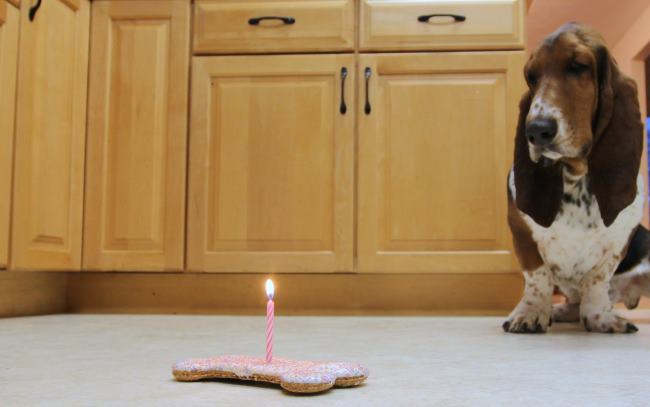 How can I get this treat without burning my nose?
However, they can be a safe treat for your pet in moderation.
Your dog deserves an occasional treat, so I've added links to homemade dog biscuit recipes; making your treats yourself means you know what's in them!
Max's favourites are these peanut butter treat recipes; he'll do anything for them!
Best Quality Dog Food: Summary
We've established that table scraps aren't the best diet for Cocker Spaniels, mainly because you can't be sure they contain all the nutrients your dog needs.
Choose the best quality dog food you can afford; why not speak to your vet if you have trouble choosing?
There are some human foods that, if eaten, can harm your pet. You need to be aware of which foods are toxic to dogs and avoid them at all costs!
Note: If you want to understand how elevated dog bowls could help your Cocker Spaniel's digestion, click here.
There's not much more to be said other than feed your Cocker Spaniel food that is the best quality you can afford, human-grade if possible; it will pay back dividends.
Foods such as lean meat or fish and plenty of fresh vegetables will make a visible difference to your Cocker's appearance and well-being!
The saying, 'You are what you eat,' doesn't just apply to us humans; it applies to our dogs, too, so what are you waiting for?
Put a smile on your dog's face and a spring back into his step today!
You might like these articles
Rat Poison Doesn't Just Kill Rats, It Kills Dogs Too!
Rat poison not only kills rats, it kills dogs too! Learn all you need to help keep your Cocker Spaniel safe from harm.
Natural Dog Food: 7 Good Reasons For Changing To Organic Pet Food
Natural dog food is good quality ingredients with no preservatives or artificial chemicals. Here are 7 good reasons why natural food is better for your dog.
Hypoallergenic Dog Foods For Pets With Allergies
Does your Cocker Spaniel suffer from allergies? Did you know it could be his diet? Discover how hypoallergenic dog food can help alleviate your pet's allergy.
Coprophagia in Dogs and Puppies: How to Stop Your Puppy Eating Poop.
What is Coprophagia? It's where dogs and puppies eat poop, and they're not fussy; any will do! Learn how to stop dogs and puppies from eating poop here.




Photo credits for Best Quality Dog Food:
1. Absoulutely_Frenchy - https://www.istockphoto.com/photo/talking-dog-gm157193441-242549
2. Mr Gus at Flickr.com (A Farquhar) https://www.flickr.com/photos/49667153@N00/ 100198546
3. Localpups at Flickr.com - https://api.flickr.com/photos/133374862@N02/20497791772
4. Jelly Dude at https://www.flickr.com/photos/eoinlane/4272958194
Recent Articles


-
Is Your Puppy Teething? How to help ease your new Cocker's pain!
Jul 10, 24 07:07 AM
 Is your cute puppy getting his first set of baby teeth? Find all you need to know about puppy teething to help your Cocker Spaniel through this difficult phase.
 -
What you eating?
Jul 02, 24 05:09 AM
 This is my Chocolate Merle Cocker Spaniel. He's a hyper-energetic boy who's always on the lookout for food!
 -
Want to train your dog to come back to you immediately? Learn how here
Apr 12, 24 12:36 PM
 Teaching your puppy recall is one of the most important things you will ever teach your Cocker. Learn how to train your dog to come back when called.