- Home
- Cocker Spaniel Information
- Golden Cocker spaniels
Golden Cocker Spaniels Are My Favourite!
Don't you love golden Cocker Spaniels?
There's something very special about them. I don't know what it is, but they're definitely the 'blondes' of the doggie world and are loved by many.
When it comes to goldens, I may be slightly biased, but I adore other Cocker colours too. Read on and discover lots of lovely pictures of cute golden cockers. I hope you enjoy!
Golden Cocker Spaniel Puppies: What's Not To Like?
Just look at these golden Cocker puppies; aren't they adorable? Who could resist?
I would be hard-pushed to choose just one of them (I think there are six), I'd love to have them all! but if I really had to choose just one, I'd plump for the little puppy second in from the right.
Or maybe the one at the end, or the middle.....couldn't I have them all?
It's a difficult choice, though!
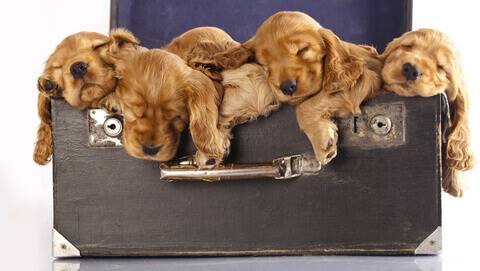 Sleepy time for these golden Cocker Spaniel puppies!
Max, My Precious Golden Cocker Spaniel
This is Max, my very loyal friend. We often walked along the old railway line at the bottom of our village. It was quite a walk, about 6 miles, but we used to manage it comfortably.
I would have a few aches and pains the next day, but Max would always be up for going around again!
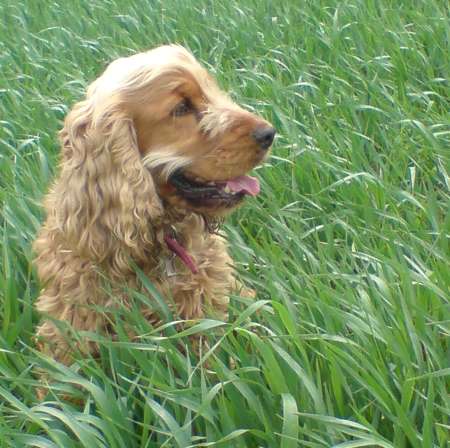 Let's rest a little while Mum!
On either side of the path was a mixture of trees, hedges and fields, some planted with corn, some simply grassed, and others just left fallow.
There were many rabbits to chase (for Max, not me!) and plenty of birds to tease.
Thankfully, there wasn't any livestock or traffic, which meant I could let him off his lead so he could have a bit of freedom!
Max loved running through the grass, but I had a job keeping him out of the cornfields!
Two Golden Cocker Spaniels
I really can't put my finger on why golden cockers are loved so much, but it's a fact they are favourites with many owners.
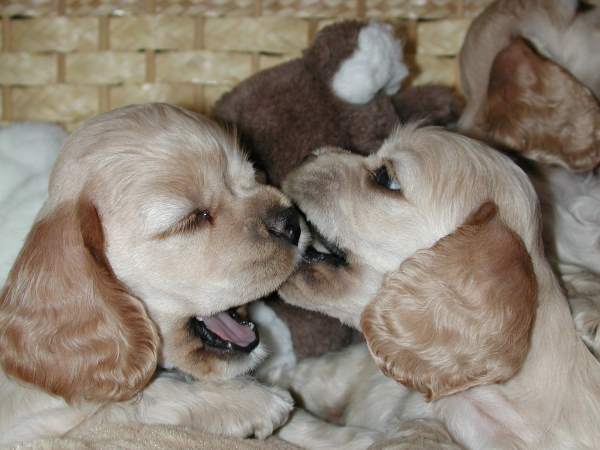
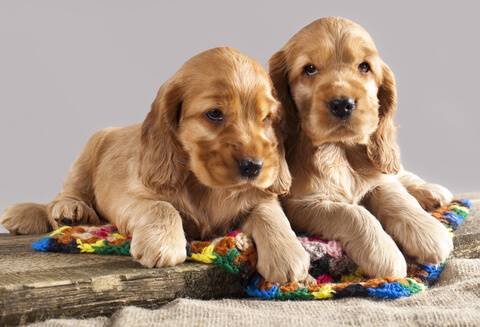 We're just two golden cocker spaniels chilling!
These two Cocker Spaniel puppies have beautiful colouring and look so cute. It won't be long before these two are start getting up to mischief, if they don't already!
The saying 'Blondes have more fun' might apply here!
Please Mum, Can I have A Biscuit?
Max was about three when this photo was taken, which seems so long ago.
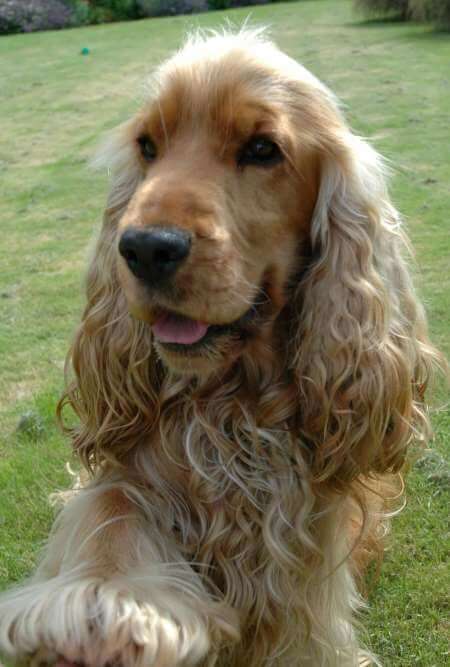 Please Mum, can I have my treat now?
As you can see, we're in the garden, and I was trying to get some weeding done. Of course, Max was helping me, but invariably getting in the way.
I had thrown a few small treats into the centre of the garden to keep him occupied (and out of my hair!), but he was soon back asking for more.
The photo shows him giving me his paw, asking for another treat. With a face as cute as his, it always worked for him!
A Beautiful Portrait of a Golden Cocker Spaniel
I'm repeating myself now, but there's something so very special about Golden Cocker Spaniels! Well, I'm bound to say that as I own one myself, so I guess I'm a little biased.
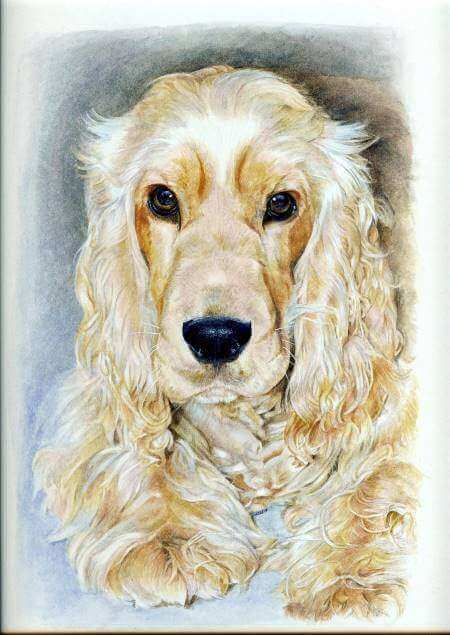 This pastel sketch is simply lovely!
I love other Cocker colours too, which is why I have photos of all colours on my website, not just the goldens!
However, this page is all about golden Cocker Spaniels, so let's get on with it!
This beautiful watercolour of Max was commissioned for my birthday by my late husband, Don, which was very sweet of him.
Max was about 12 months old then, and it's an absolutely gorgeous likeness.
I adore this portrait and have it framed and hung on the wall in my study. I can't help smiling each time I look at it.
I love it!
Max's First Taste of Snow!
This photo of Max was taken after we'd been on a walk along the old railway line near my home.
It was Max's first experience of snow, and he seemed to delight in how it floated around him like powder when he romped around in it.
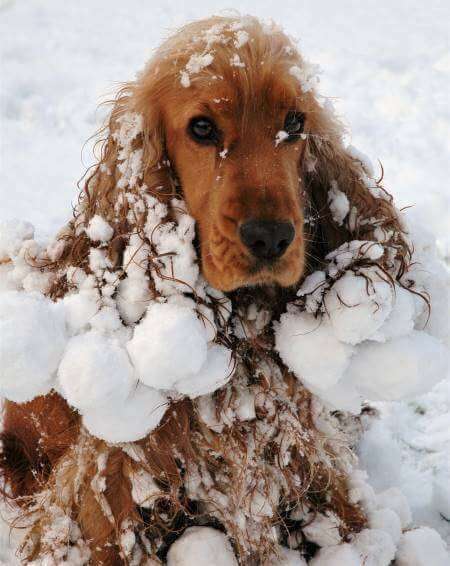
He struggled under the weight of the snowballs in his coat and around his feathers, and at one point, I thought I would have to carry him. However, he plodded gamely on!
Poor little mite, he could hardly walk by the time we'd turned around to head for home.
Before taking him inside, I had the difficult task of removing the snow from his coat. However, I eventually managed to get all the snowballs out of his fur.
It took ages!
He Also Likes To Play Football!
This is him again, much younger (about three or four months old), playing football.
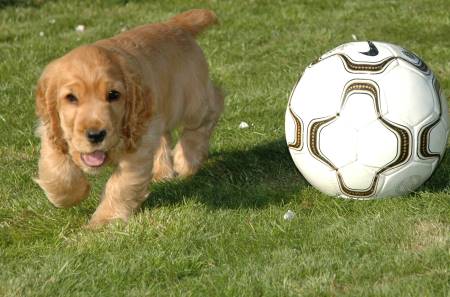 Come on Mum, kick the ball!
He would try and pick up the ball in his mouth, but it was too big for him.
Instead, he'd end up rolling over it, but he'd keep trying anyway.
It wasn't too long before Einstein realised he could actually move the football with his nose, so trying to get it into his mouth was no longer an issue!
It's Me Again!
Here he is again! Max is still a puppy in this picture, although a few months older.
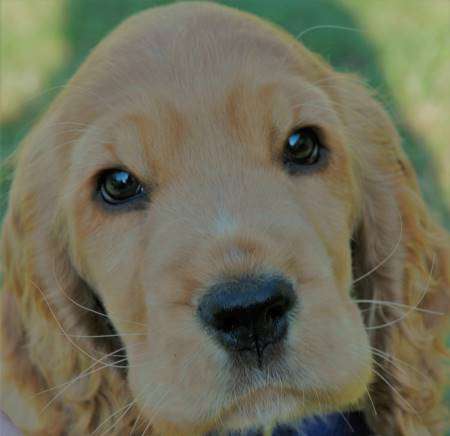 Just look at that appealing little face!
He's about 7 or 8 months old.
We'd been playing ball in the garden (as usual!), and he was exhausted.
He'd gone looking for shade as it was a sweltering day, which is exceptionally unusual for our neck of the woods; however, I wasn't complaining!
Max decided he'd had enough and went and sat in the shade under the apple tree until he cooled off and was ready for another game of football. That's why the photo is darker than it should be - he's shaded.
Puppies Grow Up So Quickly!
This photo was taken at the breeders house when he was less than one week old.
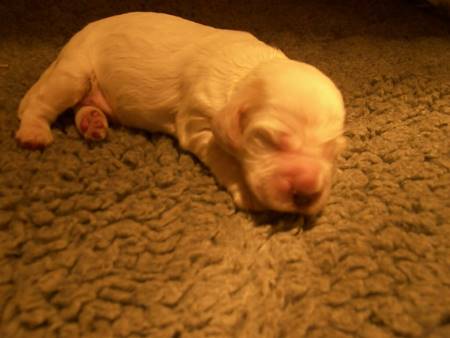 This is Max, 5 days old! Isn't he so cute?
Wasn't he just so cute?
I remember being so scared of picking him up in case I dropped him!
He's almost 14 years old now - where did the time go?
Puppy days are very special. Like our youth, they'll never come around again, so make sure you and your puppy enjoy those special times while you still can.
Appreciate every single day you have together.
My Golden Cocker Spaniel Loves His Walks!
Max is three and a half years old in this photo, and looking rather in need of a hair cut! He used to be professionally hand-stripped until, following castration, his coat seemed to thicken. It became like candy-floss!
He lost his beautiful top coat and had to be clipped, rather than hand-stripped.
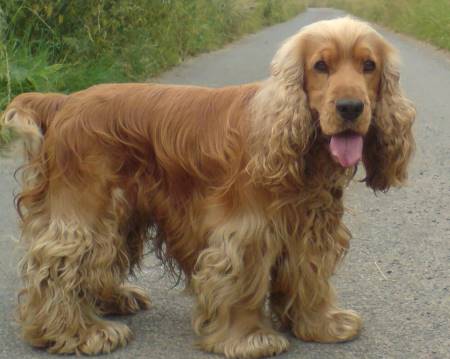 Come on, I'm waiting!
He was still the same old Max, and he loved going for walks on this old railway line just behind our house when we lived in North Yorkshire.
We walked every day for about an hour and a half.
The lane meandered for miles through the Yorkshire countryside, so it was safe to let him off his lead.
He would run on ahead, but he'd stop and look back every now and then to check I was still around.
He'd run and run but never seemed to tire. He's such a little sweetie!
Cocker Spaniel Coat Colours
I'm sure you know Cocker's coats come in many different colours and markings. It is an excellent place to give them a quick mention here.
Cocker Spaniels come in various colours, some solid, like chocolate (in fact, chocolate cocker spaniels are our second favourite!), black and, did I mention, golden?
You can also find a combination of mixed colours and markings, for example, black and white, parti-colours and roans.
Here is an explanation of Cocker Spaniel coat colours and some of the terms used to describe them.
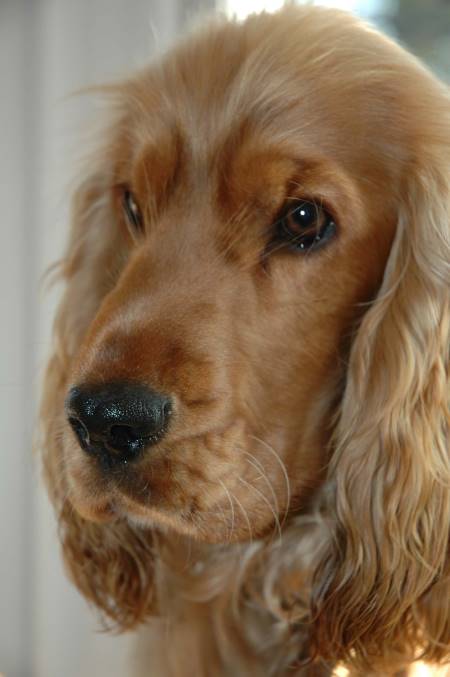 Max seems miles away, he's probably chasing rabbits!
I'm certainly not an expert on coat colours.
Generally speaking, though, the solid colours (also known as 'self') are chocolate, black, golden, and, very rarely seen, sable.
Although I've never owned a black Cocker, it's said that the black, glossy coats are much heavier, and because of this, they may need more grooming than any of the other colours.
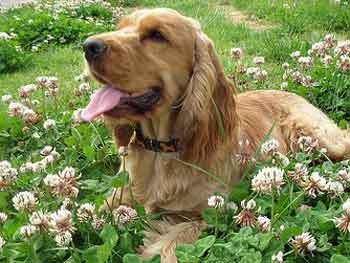
Golden Cocker Spaniels can range from a light golden colour to a very dark rusty shade. Where the golden coats are darker, they're sometimes referred to as red Cocker Spaniels.
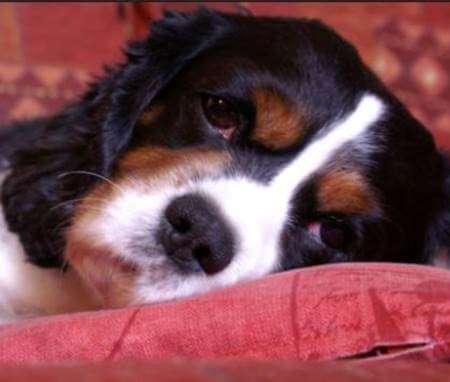 Sleepy head!
Solid Colours & Rage Syndrome
Some breeders say that the golden Cocker Spaniel (and some say all solid colours) is prone to 'Rage Syndrome'. However, today breeders are conscientious and check the history of the sire and dam for any sign of the condition before breeding.
 Hi Mum!
Thankfully, rage syndrome in Cocker Spaniels is rare, and instances of aggression often tend to be behavioural problems rather than rage.
Where a (responsible) breeder has evidence to suggest that any dog has shown signs of rage syndrome, they're unlikely to be used for breeding purposes.
Why Not Submit Photos of Your Cocker Spaniel Here?
Thank you for letting me indulge my love for Max and other golden Cocker Spaniels on this page!
If you'd like to share a photo of your golden Cocker Spaniel (or any colour, for that matter, we love them all!), simply click on this link and follow the instructions!
Photo Credits for Golden Cocker Spaniels:
1. Lilun at Dreamstime - https://www.dreamstime.com/stock-photos-english-cocker-spaniel-puppy-image22874223
2. Copyright of About Cocker Spaniels.com
3. Liliya Kulianion at https://www.dreamstime.com/stock-photo-english-cocker-spaniel-puppy-image22874290
4-8. Copyright of About Cocker Spaniels.com
9. Anita from Delphmount Cockers
10-13. Copyright of About Cocker Spaniels.com
Recent Articles


-
Is Your Puppy Teething? How to help ease your new Cocker's pain!
Jul 10, 24 07:07 AM
 Is your cute puppy getting his first set of baby teeth? Find all you need to know about puppy teething to help your Cocker Spaniel through this difficult phase.
 -
What you eating?
Jul 02, 24 05:09 AM
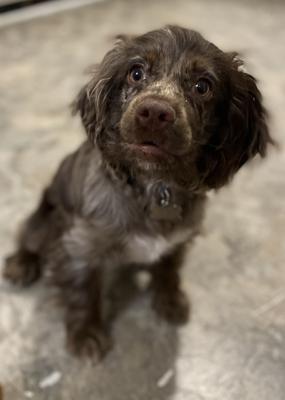
 This is my Chocolate Merle Cocker Spaniel. He's a hyper-energetic boy who's always on the lookout for food!
 -
Want to train your dog to come back to you immediately? Learn how here
Apr 12, 24 12:36 PM
 Teaching your puppy recall is one of the most important things you will ever teach your Cocker. Learn how to train your dog to come back when called.
%20and%20this%20is%20how%20he%20looked%20after%2030%20minutes!%20He%20could%20hardly%20walk%20with%20the%20weight%20of%20the%20snowballs%2C%20and%20it%20took%20ages%20to%20get%20them%20out%20of%20his%20coat!)