- Home
- Puppy training
- Puppy training games
Puppy Training Games To Delight Your Cocker Spaniel Puppy!
Puppy training games are a great way to teach your pet control and discipline; they help to teach your puppy good manners and are also a form of exercise.
Puppy games are also great fun and exciting and can help you bond with your dog. What's not to like about that? This page will give you all you need to teach your puppy how to play nicely!
Different Types of Puppy Play Toys
There are two different types of toys available to your Cocker Spaniel puppy.
There are pacifier toys, which he can chew and play with on his own, and interactive toys, such as balls, ropes, and Frisbees, which he shares with you.
Your puppy should be free to play with his pacifier toys but keep the interactive toys hidden away from him. The interactive toys are those you use to initiate play.
Below are some cool reasons for playing puppy training games; however, if you'd like to jump straight to the games, here are your links!
Cool Reasons For Playing Puppy Training Games!
Here are 7 good reasons why you should teach your Cocker Spaniel to play:
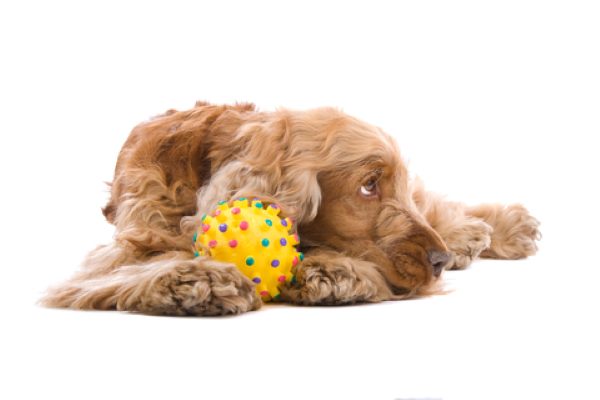 Phew! I'm tired Mum, but I'm almost ready to play again!
- Puppies may like to frolic and roll around playfully, but play doesn't always come naturally to puppies, so you may need to teach your pup 'the rules of the game' and how to play puppy games.
- Puppy training games can teach control and discipline in a way that's fun for you both, and, as a bonus, playing with your puppy can help to strengthen the bond between you and your dog.
- A puppy allowed to play (controlled) pet games every day will develop into a well-balanced adult dog who rarely gets bored. Most of us know all too well what a bored Cocker Spaniel can get up to!
- Playing exciting dog games helps stimulate your Cocker's metabolism. The exercise he gets from playing games can help to keep him fit and in good shape.
- Playing puppy training games can help with obedience training and reinforcement of your puppy's learning.
- Structured puppy play is also a great way of establishing and reinforcing your leadership status.
- You can use puppy training games as a reward instead of treats. Rewarding your puppy with play will also help to stop those calories from mounting up and making your pup chubby!
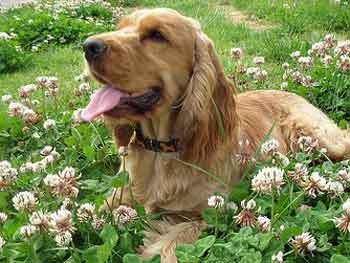
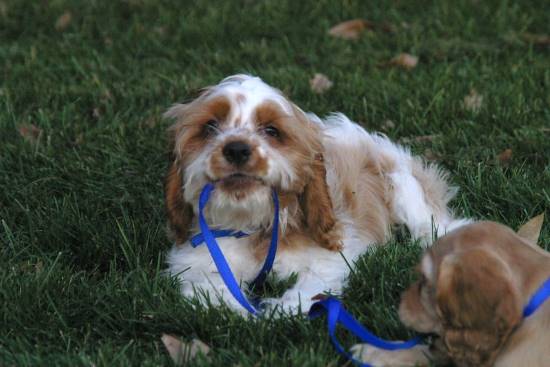 This gorgeous puppy loves to play in his garden with his brother
Playing Puppy Training Games: Let's Play Fetch!
'Fetch It!' is one of the best games you can play with your dog. I guarantee your puppy will love it! Unfortunately, my dog never did. I would throw the ball for him, and he would sit there and look at me as if to say, you threw it; you go and get it!
Here's how to teach your puppy to Fetch!
- First, ask him to 'Sit' and 'Wait'.
- Next, choose a toy (or a small ball) and show it to your puppy. Throw it a few feet away and ask him to 'Fetch It!'
- You can choose your own words, 'fetch it', 'fetch', 'go get it', or 'bring it'. The wording is to suit you, but whatever you decide, you must use the exact wording each time to help your puppy get the message.
- Your Cocker may instinctively run over to his toy and pick it up. He may even bring it back to you. If he does any of these, reward him at each stage to help him understand that he's getting it right.
For example, praise your puppy if he moves towards the toy and again if he mouths it. If he picks it up and returns it to you, praise him big style!
Job done!
Just look at the fun this 6-month-old cocker puppy is having while playing Fetch in the pool - once he gets the hang of it! You can watch the video here.
Puppy Training Games: What Can Go Wrong With Fetch It?
Although Cocker Spaniels are natural retrievers, you may need to work on this puppy game a little at first, so be patient!
- Your puppy may pick up the toy and refuse to give it back to you; if this happens, stop the game and walk away.
- Return to the 'Drop It!' command and practice until your Cocker Spaniel has fully mastered it. You can then begin again with the 'Fetch It' game.
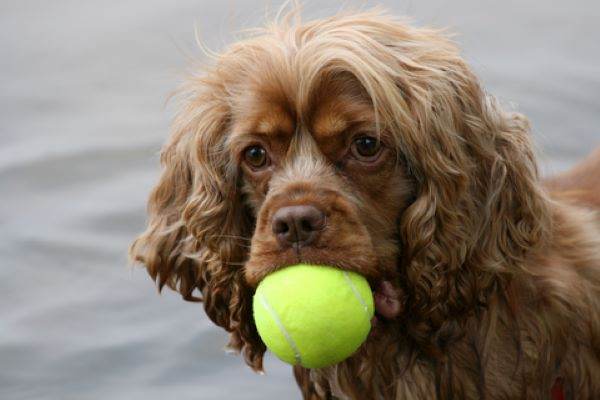 Come on Dad, let's play some puppy games!
- If your puppy loses interest in his toy, put it away, don't let him keep it. Better still, stop playing before your pup begins to lose interest.
- Your Cocker puppy may pick up the toy and run off with it. I don't recommend you chase him; otherwise he will try to get you to chase him each time (it's more fun!). The aim is to teach him to fetch the ball back to you.
Games for Puppies: See Pepsi Learning to Play Fetch!
One of our kind visitors, Ajith Kumar, shares this video of his gorgeous 5-week-old orange roan cocker spaniel puppy playing fetch and sliding around on the kitchen floor. She's so adorable that I'm getting broody!
Watch the video of Pepsi playing puppy games.
Find It! An Exciting Puppy Training Game!
Most dogs enjoy playing 'Find It!' puppy games, but your Cocker Spaniel will especially love this game as he's a natural hunter and retriever! And as well as being great fun, it's a good way of using up your dog's energy, physically and mentally.
- First, ask your dog to 'Sit' and 'Wait'.
- Put a treat in your hand and let him sniff it before hiding it. Make it easy for him; let him see where you hide the treat before you ask him to 'Find It!'.
- When he finds his treat, let him have it and don't forget to praise him for getting it right.
- As he gets better at finding the treat, make it a little more difficult for him by not letting him see where you hide it. Let him sniff it out for himself.
- Once he's mastered this, begin hiding treats in another room, behind a door, or just underneath the edge of the sofa, but don't make it too difficult for your puppy.
Don't worry if he doesn't find the hidden treats quickly; the idea is to stimulate your puppy's mind and get him to work off any excess energy.
Teaching your Cocker Spaniel to find treats around the house will keep him occupied for ages, at least until you've enjoyed a quiet cuppa on your own!
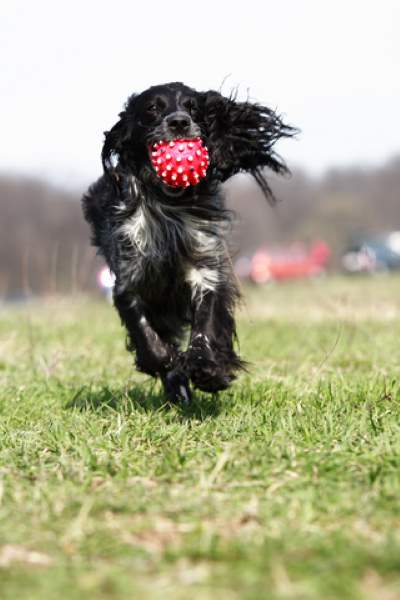 Hey Mum, look, I found it!
Hide & Seek: Peekaboo!
Play hide and seek with your dog!
Who would have thought puppy training games would have included hide and seek? It's the same as the children's hide-and-seek game, but playing with your Cocker Spaniel puppy is much more fun!
Before you begin games or play, you must always ask your puppy to sit and wait before you go and hide; it's a great form of discipline.
When you find your hiding place, call his name to let him know he can come and find you.
When he finds you, let him have a treat and give him lots of praise. After several successful games, you can move into another room to hide. It's enough at this stage that he finds which room you're in.
When your puppy begins to find you easily, make the game more challenging for him by hiding behind a door or furniture in another room.
Hide and seek is a good game for your puppy; as well as being enjoyable, it will teach him to respond more quickly to your recall command.
'Hide and seek' will have him tired out in no time, and it's a great game to play before bedtime!
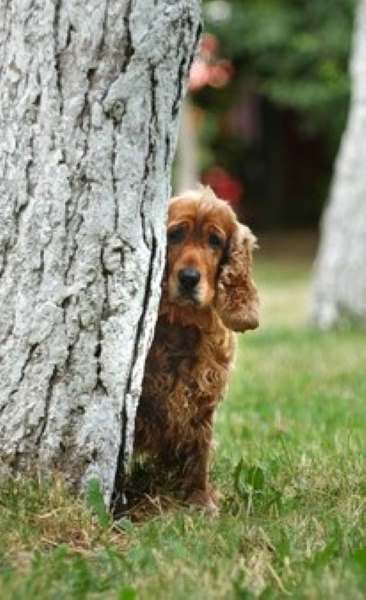 Peekaboo!
Play An Exciting Game Of Frisbee With Your Puppy
Playing Frisbee with your pup is an exciting and energetic game. It gives your Cocker a good workout, with lots of running, and you get some exercise too; it's a game you can play together.
My Cocker, Max, has a relatively high prey drive which is why he loves this game; however, it doesn't explain why he doesn't like playing Fetch It!
While we're on the subject, it's advisable to allow your puppy to master the Fetch It! game before he plays with a Frisbee, as he may run off with his catch!
It may come automatically, but you may need to teach your puppy to catch the Frisbee; here's how:
- Let your pup see and sniff the Frisbee.
- Roll the disc along the ground. Your puppy will probably chase it and pick it up. Practice this a few times until you see your puppy engaging with it, i.e. chasing the Frisbee and picking it up.
- Next, throw the disc towards your puppy, but don't aim directly at his head; throw it slightly to his left. Your first throw should be very gentle and only over a distance of a few feet. You don't want to hurt or startle your puppy.
- As he becomes more excited and engaged with his Frisbee, you can throw it further away until your puppy is chasing, jumping and catching it naturally.
Stand back and watch his little tail wag!
Having Fun With Food!
Dogs love to sniff out food, and there are several food-related games you can teach your pup. Whilst these games are pretty sedentary, they do exercise the mind!
Stuffed Kongs!
The first that springs to mind is a stuffed Kong which you can pick up at any pet store. You can stuff them with raw carrot, red pepper (Max loves raw pepper!), small pieces of kibble or chopped liver, sausage and dog treats. The possibilities are endless!
Seal off the openings at either end with a bit of chicken paste or doggie peanut butter. You can give it to him as it is, or you can freeze it to last longer.
I give Max one of these to keep him occupied if I need to leave the house for an hour or so or want some quiet time to myself. He doesn't even notice I'm gone!
A Snuffle Mat!
Dropping a few small treats onto a snuffle mat is another way of keeping your dog's mind exercised while he searches out his treats. If you don't know what a snuffle mat is, you can learn more about them and how to make your own here.
A snuffle mat is also a great way to slow your dog's eating if he tends to wolf his food down!
Tug of War Puppy Training Games
I don't know of any dogs that don't enjoy playing tug of war, but it's a game with a potential downside if not appropriately managed. I recommend you read the 'rules of engagement' I've listed below before you go on to the game itself.
Tug of War: Rules of Engagement!
Tug-of-war puppy training games can be great playtime for puppies and dogs, teaching and reinforcing self-control and obedience; however, there are some strict rules to follow.
- You should let your puppy win regularly otherwise he may learn there's no point in playing and lose interest in the game.
- If you have a shy or nervous puppy, let him win most of the time to help boost his confidence.
- If Tug of War brings out an aggressive side to your Cocker Spaniel, or he plays aggressively, play it sparingly. Better still, avoid playing this game, find a more suitable alternative for him and move on. You can reintroduce it when your puppy is better trained.
You must always play tug-of-war games using your rules, not your puppy's - you must always control the game!
How To Play Tug Of War
That said, let's begin playing tug of war!
- Start by asking your puppy to sit.
- Pick up the end of the tug rope and dangle the other end over your pup.
- Pull gently. It should trigger an instinctive reaction to tugging back in the opposite direction.
- Let him pull on the rope several times before asking him to 'Drop It!' When your puppy drops the rope, praise and reward him with another game or a treat.
- If your puppy won't drop it, stop playing and reintroduce him to the Drop It! command.
What Can Go Wrong With Tug of War Games?
Tugging is a natural instinct for a dog; it's how they feed in the wild by stripping flesh from a carcass, so it's instinctive for your puppy to pull and 'rag' a toy.
What if my puppy's not interested?
But what if your pup doesn't know what to do or is disinterested?
Try tugging gently or wriggling the rope to emulate the movement of prey. Don't pull too hard; apply enough pressure to make your pup hold onto the rope. He'll soon catch on!
What if my puppy becomes aggressive?
Tug-of-war games can teach your puppy self-control, so if he becomes over-excited or growls in a less than playful manner, stop the game immediately and put the rope away.
Behaviour like this indicates there are better games for your puppy than this; find an alternative.
My puppy refuses to let go of the rope!
If your puppy refuses to drop the rope, leave your end and walk away. Play must stop immediately. Don't praise your puppy, and don't offer any treats. If no one is holding the other end of the rope, your puppy can't play tug-of-war!
When he loses interest and drops the rope, pick it up and put it away, out of his reach.
You should practice the 'Drop It!' exercise before you allow your puppy to play again.
More Exciting Puppy Training Games!
I hope you and your puppy enjoy these games but if you need more to entertain or exercise your puppy, here are a few ideas.
Let's Play Bubbles!
Dogs and puppies love soap bubbles!
Whether they're bubbles spilling over the tub at bath time or blown from the bottles of kid's liquid bubbles - our canine friends love them!
Try blowing bubbles for your Cocker Spaniel puppy and watch his expression as he chases and bursts his first soapy bubble on the end of his nose. It's magical!
Water Games
Your puppy is bound to enjoy any kind of water game. Buy him a kid's paddling pool and let him play in there on a hot summer day.
If you have a sprinkler in the garden, let him run in and out and enjoy the feel of the gentle spray.
Puppy Obedience Training
Any obedience training will help to stimulate his mind; they're also great fun to practice. You can't practice obedience training too often!
Let's Play Football!
I used to play a version of football with Max when he was a puppy.
I would dribble the ball around the garden and my puppy would follow trying to bite it. If I kicked the ball away a short distance, he's chase it and when he caught up with it, he'd tumble over it!
Max loved playing football!
General Rules Of Playing Puppy Games!
Don't Play Chase Puppy Games!
Although it might seem fun, I recommend you wait to play chase or similar games with your pup until he's fully trained - find out why here!
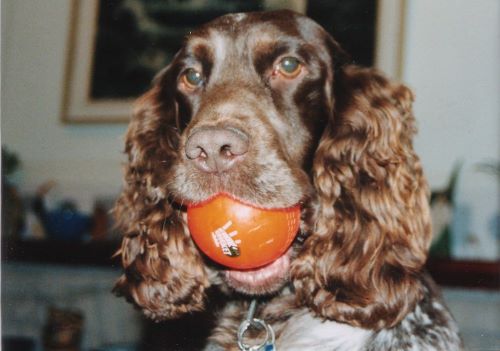 Will someone please throw my ball?
You Decide When It's Playtime!
Don't allow your puppy to initiate play. You should control when puppy play begins and stops; you are his leader!
Puppy Games Can Help With Obedience Training
If you teach your puppy that he must sit and wait before he's allowed to play one of his puppy games, it will establish that you are in control and help reinforce your puppy's obedience training.
Don't Let Him Become Bored
Always stop playing before your puppy becomes bored. Leave him wanting more to keep your puppy keen!
Use A Firm Tone Of Voice; Sound Like You're In Control!
Always give instructions using a firm tone of voice to get his attention and cooperation.
A high-pitched, excited, squeaky voice will not establish any control; it will only heighten your puppy's excitement. If your puppy is over-excited, he's unlikely to listen to your instructions.
Don't Let Your Puppy Become Too Excited!
Don't over-excite your Cocker during puppy play for the same reasons mentioned above.
Over-stimulation may be caused by teasing or taunting your puppy with a toy before throwing it to him, for example, dangling the toy above his head or hiding it behind your back for too long.
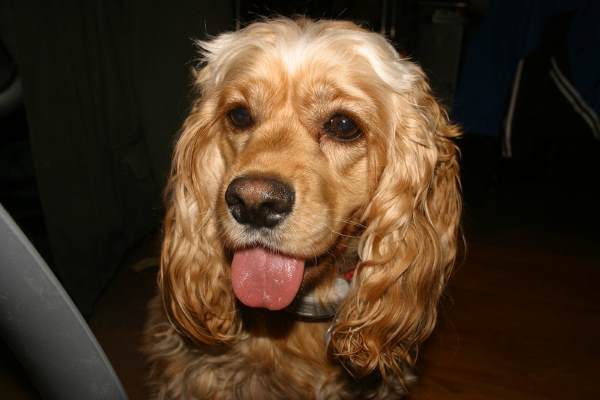 I'm a big dog now, but I still love playing puppy games!
While teasing your puppy with a dangling toy may seem fun, a puppy who's often teased in this way can become frustrated or over-excited.
Frustration and over-excitement can lead to control issues and behavioural problems, such as increased dominance, encouraging him to become more pushy, boisterous, and ultimately, challenging to control.
The only time when teasing is allowed is if your puppy is timid or shy. Teasing in this way can help bring him out of his shell and build his confidence and teach him how to play and have fun!
Ignore Attention-Seeking Antics
Don't allow your puppy to demand your attention. Ignore him if he displays attention-seeking behaviour; any attention you give your puppy should be on your terms.
Here are more articles you might find interesting!
How To Train A Puppy
Want to know how to train a puppy? Follow these essential rules of puppy training to help your pup get it right first time!
Puppy Proofing Your Home; Help To Keep Your Pup Safe
It's almost time to bring your puppy home, but can you be sure your home is puppy proof? Learn how to make your puppy's new home safe and protect him from harm.
Training A Puppy: The Wait And Stay Commands
Training a puppy to 'wait and stay' is a great way of controlling your dog. Understand the difference between the two instructions and help keep him safe.


Photo Credits: Puppy Training Games
1. Erik Lam at httpsXXXwww.dreamstime.comXroyalty-free-stock-photo-cocker-spaniel-image9145715
2. J T Poling at httpsXXXwww.flickr.comXphotosXbigdog3cX414117093X
3. Lyn Adams at httpsXXXwww.dreamstime.comXstock-images-playing-fetch-image5444514
4. Parpalea Catalin at httpsXXXwww.dreamstime.comXroyalty-free-stock-images-cocker-playing-image15094859
5. Serban Enache at httpsXXXwww.dreamstime.comXstock-photos-hide-seek-image974623
6. angus-farquar-flickr.com - httpswww.flickr.comphotos49667153@N00100198546
7. J Todd Poling at httpsXXXwww.flickr.comXphotosXbigdog3cX2169975793
Recent Articles


-
Is Your Puppy Teething? How to help ease your new Cocker's pain!
Jul 10, 24 07:07 AM
 Is your cute puppy getting his first set of baby teeth? Find all you need to know about puppy teething to help your Cocker Spaniel through this difficult phase.
 -
What you eating?
Jul 02, 24 05:09 AM
 This is my Chocolate Merle Cocker Spaniel. He's a hyper-energetic boy who's always on the lookout for food!
 -
Want to train your dog to come back to you immediately? Learn how here
Apr 12, 24 12:36 PM
 Teaching your puppy recall is one of the most important things you will ever teach your Cocker. Learn how to train your dog to come back when called.