- Home
- Cocker Spaniel Health Issues
- My Dog Has Bad Breath
Phew! My Dog Has Bad Breath!
If your dog has bad breath you'll certainly know about it! Find out what causes canine bad breath and what you can do to make your loving Cocker Spaniel's kisses fresh and sweet once again.
My Dog Has Bad Breath: What's Causing It?
Despite the unfortunate term 'dog breath', canines aren't meant to have bad breath, so if your pet's breath turns your stomach, you should try to find out what's causing the problem.
 If your dog has bad breath, check it out
Dog Bad Breath Causes
Where a dog's breath smells less than fragrant, the cause of this stinky breath will more than likely be mouth-related.
It could be bacteria trapped in the fur and lip-folds around his mouth, which can smell really unpleasant.
It can also be diet related, especially if the diet is not nutritious enough.
If you don't have a dental routine for your dog, and he hasn't seen his vet in a while, this can cause many oral hygiene problems.
If your dog's bad breath isn't caused by a lapse or a non-existent oral hygiene routine, it could be one of the symptoms of an underlying illness.
So, it's a process of elimination. If your Cocker's breath is a bit whiffy, check out his dental and oral health first.
Poor Dental & Oral Health Can Cause Bad Dog Breath
The most likely dog bad breath causes point to poor oral or dental health and hygiene, for example:
- plaque and tartar,
- decaying teeth,
- pyorrhoea,
- periodontal disease,
- gingivitis,
- mouth infections,
- oral tumours,
- lip fold dermatitis.
Plaque & Tartar
Bits of food trapped between your dog's teeth can attract bacteria. When food and bacteria combine, plaque begins to form.
If plaque isn't removed, a hard residue called tartar is formed.
Tartar will attract more bacteria to the surface of the tooth and to the gum line, which then creates more plaque and more tartar.
And so the cycle continues.
Plaque and tartar can lead to gingivitis and periodontal disease and that's when your Cocker's breath begins to smell dreadful.
So if your dog has bad breath, take note!
Gingivitis, Pyorrhoea and Periodontal Disease
As the bacteria multiplies, your Cocker's gums may become inflamed and infected. They may also bleed. This is known as gingivitis.
Pyorrhoea is a more serious inflammation of the dog's gums and if left untreated (or undiscovered) pus will develop and the condition will worsen, leading to loosening of the teeth.
If
the tartar isn't removed it builds up underneath the gums causing
damage to the tissue that surrounds and supports your dog's teeth.
It's at this point that the damage is referred to as 'periodontal disease', which can be very painful for your pet and can lead to abscesses, loosening of teeth, tooth decay, and tooth loss.
Advanced periodontal disease is irreversible.
In severe cases, the bacteria enters the bloodstream and can lead to damage of vital organs such as the heart, the liver and the kidneys.
Symptoms of Periodontal Disease
Symptoms of gingivitis and periodontal disease are as follows:
- smelly dog breath,
- inflamed, red, or discoloured gums,
- bleeding gums,
- receding gums,
- swelling of the gums,
- pockets of pus,
- damaged, loose, or missing teeth,
- sensitivity around the mouth (your pet may paw at his mouth),
- loss of appetite or refusal to eat hard foods,
- drooling.
If you'd like to understand just how serious periodontal disease can be, you can find out more here.
Prevention of Periodontal Disease
The good news is that gingivitis, pyorrhoea and periodontal disease in general are easily prevented.
 My dog has terrible breath!
Brushing removes plaque and kills bacteria. With regular brushing (as well as making sure the vet gives them a thorough check each time you visit his surgery) you can be certain your Cocker's teeth and gums will remain healthy.
Unfortunately you can't remove tartar just by brushing so it's best not to let it form in the first place.
Removal of tartar will need to be done by your vet, by a de-scaling process under anaesthesia.
However, once done you'll then be able to keep plaque and tartar at bay by brushing your dog's teeth every day.
Brushing Your Dog's Teeth
If your dog has bad breath and you don't brush his teeth regularly, it's time to introduce a new oral hygiene routine for your pooch!
An ideal time to begin is when he's very young, but you'll probably need to help your puppy get used to having his teeth brushed first, otherwise it will be difficult for you both.
If your Spaniel is an older dog, please don't let that stop you - begin today.
It may take a little longer to accustom him to having his mouth and teeth inspected and brushed, but it will be the first step to making sure his mouth stays clean and healthy.
Regular trips to the vet for oral inspections and de-scaling when advised will also help to keep your dog's teeth healthy.
Your Cocker Spaniel's Diet
Your Cocker Spaniel's diet could also have an impact on his breath, especially if his diet is lacking in nutrition.
I recommend feeding your dog kibble, rather than wet food. Not only can you guarantee that his diet is fully nutritious, but the abrasive biscuits can also help to keep his teeth clean.
To help keep your dog's teeth and gums healthy, you can also encourage him to chew on:
- rawhide chews,
- chew toys,
- raw vegetables,
- raw bones (not chicken),
- dental chews.
If your dog has bad breath, you can even buy pet breath mints for him.
There's also a liquid breath freshener, simply pour one capful into his water bowl each day.
I haven't tried the mints (for Max, obviously!), so I can't really say one way or another, but the liquid mint freshener seems to help.
I guess anything's worth a try to get your dog's breath smelling sweet again!
Underlying Health Problem
If your dog's mouth and gums look healthy, and your dog's bad breath continues, it may be a symptom of something more serious, in which case, you should take your dog to see his vet and get a professional diagnosis.
Conditions that may cause dog bad breath (apart from periodontal disease) are:
- gastrointestinal disease,
- cancer,
- kidney disease,
- respiratory problems,
- viruses and infections,
- coprophagia,
- diabetes.
If you can safely rule out oral hygiene problems, and your dog's bad breath continues for any longer than a couple of days, then a trip to your vet is highly advisable.
You want to be certain he's okay, don't you?
My Dog Has Bad Breath: Summary
Bad breath is generally either the result of poor oral hygiene or is a symptom of an underlying health problem. The trick is to determine which it is, and I would always recommend you leave this up to your vet to decide.
Depending on the cause of your dog's halitosis will determine the remedy that your vet may use, however he will always endorse a good oral heath routine for your dog.
Photo Credits: My dog has bad breath
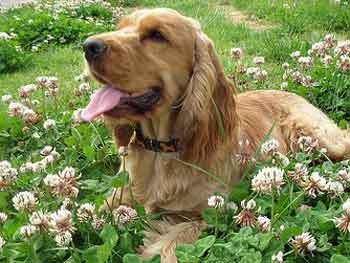
1. Absolutely Frenchy at https://www.istockphoto.com/photo/talking-dog-gm157193441-242549
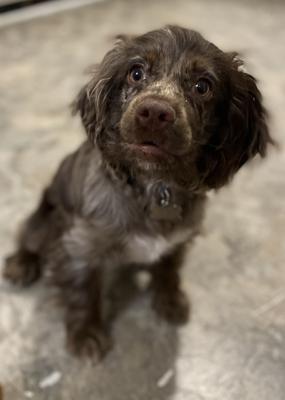
2. Visitor photo of her Chocolate Cocker Spaniel, Rocky
Recent Articles


-
Is Your Puppy Teething? How to help ease your new Cocker's pain!
Jul 10, 24 07:07 AM
 Is your cute puppy getting his first set of baby teeth? Find all you need to know about puppy teething to help your Cocker Spaniel through this difficult phase.
 -
What you eating?
Jul 02, 24 05:09 AM
 This is my Chocolate Merle Cocker Spaniel. He's a hyper-energetic boy who's always on the lookout for food!
 -
Want to train your dog to come back to you immediately? Learn how here
Apr 12, 24 12:36 PM
 Teaching your puppy recall is one of the most important things you will ever teach your Cocker. Learn how to train your dog to come back when called.